MQTT and Apache Pulsar for IoT: Powering the Connected Vehicle

summary
Real deployment for a connected vehicle use case streams telemetry from tens to hundreds of millions devices and uses MQTT for edge comms while Apache Pulsar provides backend durability and scale. Pulsar hits about 1.8M msg/s on a single partition and ~5 ms 99th‑percentile latency; Oxia replaces ZooKeeper to enable millions of metadata keys and sequential per‑device sequences. MQTT‑on‑Pulsar multiplexes many logical MQTT topics into single Pulsar partitions, stores per‑device sequences in Oxia, and supports days‑to‑weeks queued command delivery.
AI-written summary · about
chapters (11)
- 0:00Connected vehicle use case
- 2:53Apache Pulsar overview
- 4:58Pulsar messaging deep dive
- 6:40Pulsar architecture and scalability
- 8:24Pulsar vs other brokers
- 9:47Replacing ZooKeeper with Oxia
- 11:55Oxia for IoT workloads
- 14:03MQTT topic mapping
- 15:29Virtual topics for commands
- 17:00Unified IoT platform benefits
- 18:04Q&A
related talks
 30mCreating a Data Fabric for IoT
 37mCreating Connected Car Platforms with MQTT
 40mUsing MQTT & Sparkplug as your IIoT Digital Transformation Toolkit
 44mBenefits of MQTT for IoT Messaging and Beyond
 32mConnecting Things Together, an IoT Data Protocol Story - Dave McAllister, Solace
 16mBuilding scalable IoT systems with MQTT and AWS
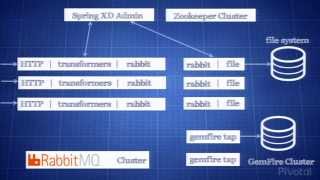 01h 09mIoT Realized - The Connected Car
 53mComparing Messaging Techniques for the IoT