Using MQTT & Sparkplug as your IIoT Digital Transformation Toolkit

summary
Demonstrates a concrete IIoT stack: Eclipse Paho MQTT transport with a standardized namespace and a compact protobuf payload format from Sparkplug B / Eclipse Tahu, plus per-tag timestamps and quality flags. Claims reduce polling bandwidth by ~90% through report-by-exception and MQTT session state (last will and testament) for immediate offline detection. Shows production-scale results: 14,000 miles of pipeline, ~1,000 booster stations, ~5,000 PLCs, 20 years at five‑nines availability using this architecture.
AI-written summary · about
chapters (13)
- 0:00Introduction
- 2:50History of Industrial Control Systems
- 6:25Why MQTT is popular
- 9:57What is MQTT
- 13:08Eclipse Foundation Survey
- 14:21MQTT
- 18:08Sparkplug
- 19:00MQTT vs IIoT
- 20:45Steps to Digital Transformation
- 23:44The Reality
- 24:48This is my world
- 26:33Sparkplug update
- 35:42Questions
related talks
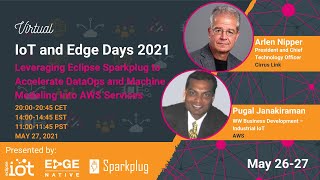 51mLeveraging Eclipse Sparkplug to Accelerate DataOps and Machine Modeling into AWS Services
 26mSparkplug Has Launched! Now What?
 44mSparkplug VS OPC UA
 30mOpen Source IoT and Edge Computing: The Eclipse Way
 44mBenefits of MQTT for IoT Messaging and Beyond
 41mScaling IoT and Web messaging infrastructure for fun and profit: An Introduction to Eclipse Amlen
 24mRoute and store MQTT messages anywhere with Eclipse Zenoh
 32mConnecting Things Together, an IoT Data Protocol Story - Dave McAllister, Solace