Welcome to the OTEL California
summary
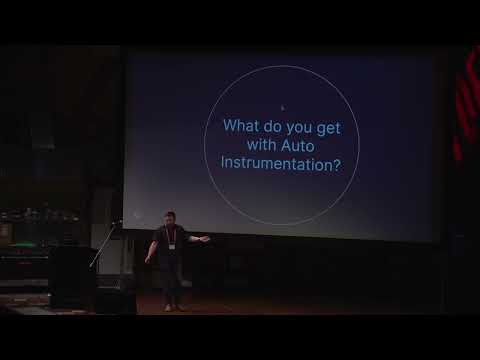
30-minute, hands-on account of using OpenTelemetry with Python and Django showing what actually works and what doesn’t: install the SDKs and exporters, run a single long autoinstrument command, then add a couple of lines to capture DB queries so traces include SQL timing. Auto-instrumentation often leaves spans as servers so maps break unless you set the peer.service attribute and mark HTTP calls as clients. Demonstrates payload injection with Trace Parent/Trace State for ROS2/robot messaging and explains when to route through an OpenTelemetry Collector and why vendor lock‑in still happens at storage.
AI-written summary · about
chapters (11)
- 0:00Introduction and speaker intro
- 1:53What is OpenTelemetry
- 5:18Auto-instrumentation basics
- 7:23Direct sending vs agent pipelines
- 9:50Django auto-instrumentation demo
- 13:05Tracing third-party API calls
- 15:30Database call tracing
- 16:31Client-server tracing in Python
- 19:49MQTT and ROS2 tracing
- 22:00Is OpenTelemetry vendor lock-in proof?
- 24:50Summary and recommendations
related talks
 24m"Introduction to OpenTelemetry with Python"
 30mPractical introduction to OpenTelemetry Tracing
 38mPractical introduction to OpenTelemetry tracing
 27mDistributed Tracing with OpenTelemetry
 14mGetting Started with OpenTelemetry in Python
 22mOpen Telemetry for API Monitoring
 50mGuide to Observability with OpenTelemetry
 41mPractical introduction to OpenTelemetry tracing