AppCraft: Lessons Learned building successful Backend Driven Mobile UI

summary
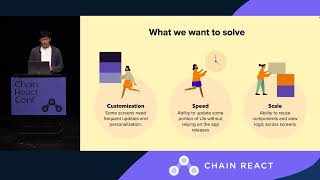
Zalando’s AppCraft is a backend-driven mobile UI system built over three years that currently powers the app’s home screen and many landing and partner pages, deploying visual and behavioral changes in real time. It uses a small set of seven primitives composed with a flexbox layout model, takes a server-side React-based rendering engine that emits JSON descriptions and a native iOS/Android client that renders JSON to native screens. React Native experiments fail early, the native approach scales, and about 20 teams contributed to backend pages, with ongoing stability and support challenges.
AI-written summary · about
chapters (8)
- 0:00Introduction and welcome
- 1:36What is AppCraft framework
- 3:24Demystifying backend driven UI
- 9:22AppCraft architecture overview
- 15:18Evolution of AppCraft project
- 23:21Challenges and pandemic impact
- 26:55Key takeaways and lessons learned
- 29:42Closing and Q&A
related talks
 41mApps vs Web: Lesson from Zappos.com
 32mLife is too short to develop only for Android – A journey to Server-driven UI
 09mServer-Driven UI
 34mFrom zero to app in six weeks
 41mComplex Application Design
 35mLife is too short to develop only for Android – A journey to Server-driven UI
 25mDon't Just React, Mobilize
 48mA page out of Server driven UI on Android