Learnings from consulting on MariaDB
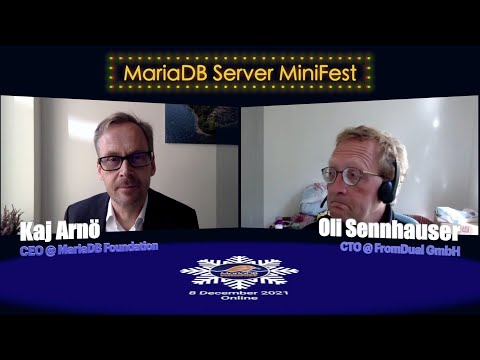
summary
Consulting work reports most class content stays the same across MySQL and MariaDB — 90–95% shared course material — and trainers run their labs on MariaDB 10.6. Customer mix shifts strongly from MySQL to MariaDB — shift from 0% to 75% in four years — driven mostly by Linux distributions (Red Hat, Debian, Ubuntu) and vendor repos; Docker and public cloud usage remain rare in central Europe. Common pain points: Galera cluster upgrade breakages, crashes from poor error handling on bad configs, and optimizer persistent-statistics regressions since 10.4 that require running ANALYZE after loads.
AI-written summary · about
chapters (28)
- 0:00Introduction and frontline analogy
- 1:16FromDual consulting and training
- 2:30MariaDB Foundation goals and adoption
- 3:17Training classes and ecosystem shift
- 4:24Reasons for MySQL to MariaDB migration
- 6:48How users discover MariaDB
- 8:03Importance of Linux distributions
- 9:21Docker and download sources
- 10:30Training on latest MariaDB versions
- 12:00New features in MariaDB releases
- 14:06Optimizer improvements and pitfalls
- 15:56Typical training attendees
- 17:02DevOps reality and developer languages
- 19:02Python and PostgreSQL competition
- 21:31MariaDB's cheap and crappy reputation
- 23:02Cloud adoption and migrations
- 24:52Migrations from other databases
- 26:23Management-driven migration decisions
- 27:11Advice for MariaDB Foundation adoption
- 28:46Post-pandemic event strategies
- 29:40MariaDB Server Fest feedback
- 31:15Social media presence and channels
- 32:28Technical improvements and bug fixes
- 33:13Error handling and stability concerns
- 35:39Improving error messages and codes
- 39:01Documentation quality and process
- 41:16Documentation search and SEO issues
- 42:05Conclusion and future steps