Demo: Resource(Cost) optimization on planet scale Kubernetes clusters.

summary
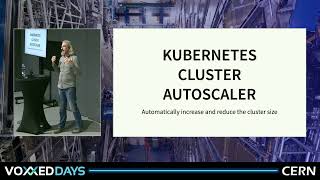
Planet-scale Kubernetes can run up to 5000-node clusters with about 110 pods per node, and costs usually grow over quarters unless clusters are actively tuned. Practical levers include right-sizing requests/limits, HPA + VPA (use custom metrics), KEDA scales on events for DB or LB cues, and cluster autoscalers like Cluster Autoscaler or AWS-backed Carpenter. Operational fixes: descheduler, PodDisruptionBudgets, topology-aware routing/ISTIO to avoid cross-AZ transfer, node-local DNS cache, smaller Docker images, reserved/preemptible instances, and cost tools such as Kubecost, Goldilocks, CloudZero/OpenCost.
AI-written summary · about
chapters (13)
- 0:00Kubernetes resource optimization
- 1:25Planet-scale Kubernetes challenges
- 3:53Resource costs exceed expectations
- 4:57Right sizing and autoscaling
- 6:23Advanced autoscaling with KEDA
- 7:48Pod placement and affinity rules
- 8:53Disruption budgets and cleanup
- 9:57Container lifecycle and quotas
- 10:40Infrastructure beyond Kubernetes
- 11:44Cross-zone traffic reduction
- 12:49Ingress and DNS optimizations
- 13:55Docker image optimization
- 14:38Continuous resource analysis tools
related talks
 11mCost and Resource Optimization In Kubernetes
 36mOptimizing Resource Usage in Kubernetes
 39mOptimizing Resource Usage in Kubernetes
 44mFinOps at scale: Lessons from scaling Kubernetes workloads
 28mScaling in Kubernetes Safely on On-Prem KaaS Across 1,300+ Clusters and 40,000+ Nodes
 32mOptimizing Resource Usage in Kubernetes
 34mPanel: Improving and Managing Kubernetes at Scale
 33mUncover Kubernetes cost-optimization trends