Cilium Cluster Mesh: The eBPF-Powered Multicluster Solution for Kubernetes

summary
Cilium Cluster Mesh claims a single CNI provides multicluster service discovery, identity, encryption, observability and load balancing using eBPF-powered kernel hooks. Architecture uses a per-node agent + cluster-mesh API server to share endpoints and identities. Demo runs on two Kind clusters with IPv6 and FRR BGP plus MetalLB, showing east‑west load balancing across v1/v2 HelloWorld endpoints works natively while north‑south ingress needs a service‑entry workaround to reach remote endpoints. Requirements include same data‑path mode, reachable nodes, non‑conflicting pod CIDRs and open intercluster ports.
AI-written summary · about
chapters (9)
- 0:00Introduction to Rutan
- 1:59Cilium and eBPF basics
- 3:06Multi-cluster challenges
- 6:29Service mesh benefits
- 9:26Implementing cluster mesh
- 12:20Cilium cluster architecture
- 14:19Setup and requirements
- 17:31East-west traffic demo
- 22:11North-south traffic routing
related talks
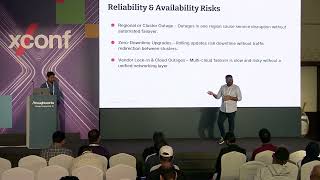 32mBreaking Boundaries: Multi-cluster with Cilium cluster mesh
 31mCilium Mesh
 10mLightning Talk: Connecting Klusters on the Edge with Deep Dive into Cilium Cluster Mesh
 05mUnlocking Next-Gen Networking and Security with Cilium Service Mesh
 28mConnecting the World: Your Hands-on Guide To Cilium ClusterMesh and MCS-API
 35mNext-level Kubernetes Networking with Cilium - Nico Meisenzahl and Philip Welz
 43mService MESH without the MESS
 24mThe Cilium Story - Why We Created Cilium