Moving from Mesos to Kubernetes Without Anyone Noticing

summary
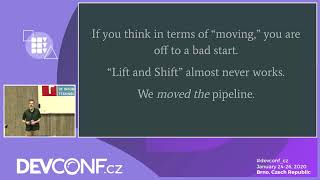
Hootsuite runs Mesos/Marathon and implements a migration that moves 20 microservices to Kubernetes with a three‑person ops team in about six weeks while keeping developers’ code unchanged. The platform uses Docker images, Jenkins pipelines, Helm/helm charts, Terraform/Packer/Ansible for infra, and a small Go mesos-to-k8s converter that generates Kubernetes YAML. Traffic uses an Nginx+Consul bridge to prefer Mesos backends while duplicated workloads run in both clusters, allowing instant rollback by scaling Mesos instances back up.
AI-written summary · about
chapters (26)
- 0:00Intro
- 1:33Disclaimer
- 2:41Before schedulers
- 5:00Microservice Pipeline
- 6:10Microservice Packaging
- 6:33Deployment Files
- 7:01Platform
- 7:21Setup
- 7:44Scheduling
- 8:01Service Proxy
- 9:32Service Adoption
- 12:58Pipeline
- 13:17Containers
- 13:36Routing
- 16:56Project skeleton
- 17:28Documentation
- 18:14Demo
- 24:20Migration Results
- 24:37What Went Wrong
- 25:54Choose the least important service first
- 26:15Use rollback plan
- 26:26Write down deployment pipeline
- 26:47Make documentation readable
- 27:00Be pragmatic
- 27:17Minimize disruption
- 28:21Links
related talks
 36mFrom Mesos to Kubernetes
 42mUsing Mesos to Drive Devops Adoption at Scale
 44mMigrating a Monolith to Kubernetes
 35mKubernetes journey
 01h 25mTutorial: Migration 101: From VMs to Kubernetes
 43mMoving the Unmovable: migrating from VMs to K8s
 45mLearning How to Pronounce Kubernetes to Production in 3 Months!
 46mMigrating from VMs to K8s