Reflections on a decade of k8s. How it has been and what the future is holding.

summary
Kubernetes starts as a decade-old abstraction that promises eventual consistency and keeps simplifying itself — the community recently removed 1.07 million lines of cloud- and vendor-specific code. Operators become the pattern for running stateful services, with multiple Postgres operators proving databases can work on k8s. AI workloads run on Kubernetes — big firms used to train LLMs — and tooling like WebAssembly rising and Ray shape the next wave of workloads.
AI-written summary · about
chapters (11)
- 0:00Kubernetes decade reflections
- 1:03Kubernetes origins
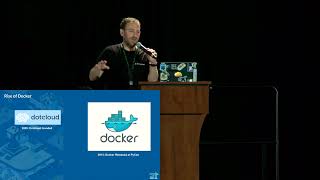
- 3:58Docker’s container role
- 5:44Developers and microservices
- 6:50Kubernetes hardware abstraction
- 8:15Nested Kubernetes abstractions
- 9:17Kubernetes and technical debt
- 10:39Kubernetes operators
- 12:04Kubernetes as a platform
- 13:30Future Kubernetes trends
- 14:36Q&A
related talks
 29m11 5 years of kubernetes and looking to the future
 24mKeynote: A Decade of Kubernetes: Community-Driven Evolution
 20mKeynote: Kubernetes - Don't Stop Believin'
 14mLessons from the Kubernetes Adventure
 21mKeynote: In Search of the Kubernetes "Rails" Moment
 44mQ&A
 05mBare Metal to Containers to K8s: How We Got Here
 20mKeynote: What's Next? Getting Excited about Kubernetes in 2018