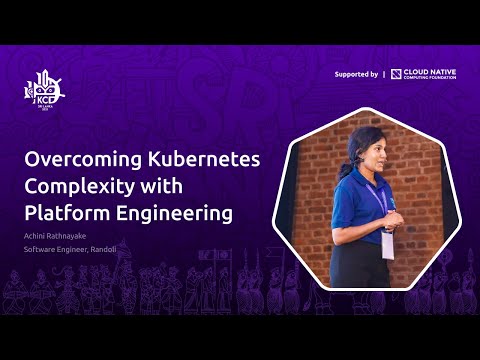
Overcoming Kubernetes Complexity with Platform Engineering
summary
Claims that platform engineering cuts the 30% of developer time spent on Kubernetes by replacing manual manifest work with a form-driven UI that generates YAML, pushes to Git or a Helm repo, and uses Argo CD for deployment. Built components include a form-based manifest generator, a templating catalog reused across 10+ services, a consolidated cluster dashboard, and a logs/events UI that surfaces guided insights. Outcome: faster onboarding and the ability to deploy applications within minutes.
AI-written summary · about
chapters (10)
- 0:00Introduction
- 1:22Why we explored platform engineering
- 2:48What is platform engineering
- 4:14Kubernetes adoption challenges
- 7:27High learning curve and manifests
- 8:32Scaling teams and best practices
- 10:38Debugging and feedback loop
- 12:47Multi-cluster management
- 13:31Benefits of platform engineering
- 14:16Q&A
related talks
 44mIs Platform Engineering a hype? Let's build a platform together!
 18mThe Past, the Present, and the Future of Platform Engineering
 52mFrom Silos to DevOps to Platform Engineering: embracing GitOps and going behind the hype
 43mPlatform Engineering Redefined: Evolving Kubernetes Beyond Container Orchestration
 40mThe Elephant in the Kubernetes Room: Team Interactions
 15mKubernetes Deployment from Platform to API
 40mBuild Your Own Developer Platform in 90 Minutes Using Kubernetes, ArgoCD, and Backstage
 32mKubernetes as a Platform Framework Journey from IaC Pipelines to K8s APIs