Sponsored keynote: Can AI handle the complexity of Kubernetes and cloud-native environments?

summary
Claims that AI solves cloud-native complexity hinge on three concrete limits: teams lack data-science know-how, tracing/service-dependency graphs are incomplete, and engineers distrust opaque outputs. Metric-based anomaly detection works well using Prometheus and Thanos and paid Grafana services; forecasting often uses Prophet forecasting. Trace-based insights require Jaeger/Zipkin traces and full instrumentation, and automated root-cause remains unattainable. Practical helpers appear as ChatGPT-based recommendations and code-level metrics in New Relic, but expect instrumentation cost and pay-per-insight tradeoffs.
AI-written summary · about
chapters (13)
- 0:00Intro
- 0:38Welcome
- 1:44Three challenges
- 3:10The good part
- 4:31The bad part
- 5:10Things to be mindful of
- 6:26Traces
- 7:06The Ugly Part
- 7:41Moving 2023
- 8:20AI Services
- 9:06Code Level Metrics
- 10:09Recap
- 11:30Questions
related talks
 05mAutomating Cloud-Native Infra with Intelligent Tools
 38mAI as a Platform Engineer: Explaining Kubernetes Failures, Not Just Detecting Them
 09mAI-Powered Cloud Automation – transforming cloud operations
 26mAI-Driven Cloud Observability: Reduce toil and amplify time to resolution
 01h 00mData is out, knowing is in: Applying AI to automate cloud operations
 12mSponsored Keynote: The Future of Observability in K8s - Nik Jain & Steve Ng, New Relic
 08mThe Future of Observability: Trends, AI, and New Relic’s Vision f...
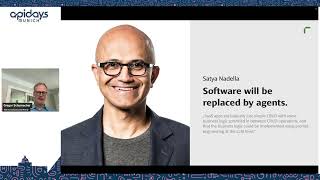 23mWhat we can learn from cloud adoption about AI adoption