How to Safely Deploy AI Agents that Write and Manage your IaC

summary
Two years of production experience shows AI agents can safely manage IaC only when they run inside a centralized agent runtime with sandboxing, durable sessions and replayable history; agents never run deployments directly but produce PRs that hit existing pipelines. The stack: OpenGenie open source runtime, limited-permission GitHub Apps, Vault-style credential issuance, policy checks and observability across four planes (runtime, credentials, change control, audit). Long-running sessions reach near 100% ready-made code and PR-gated deployments.
AI-written summary · about
chapters (12)
- 0:00Introduction to AI agents
- 1:56Why infrastructure agents matter
- 4:48Why IAC is still necessary
- 7:15Agents as team members
- 9:24Need for agentic runtime
- 11:53Introducing Open Genie
- 13:37Building safe agent workflows
- 18:13Securing credentials and access
- 20:22Autonomy vs oversight
- 21:47Importing cloud resources
- 25:24Detecting and fixing drift
- 27:21Q&A session
related talks
 35mManaging the AI Surge: Governing & Scaling in the AI Era
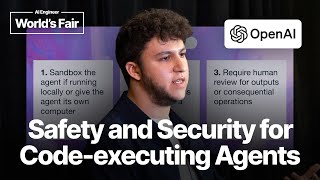 14mOpenAI on Securing Code-Executing AI Agents
 24mAI Governance for developers: A practical framework for deploying autonomous coding agents safely…
- 24mAI Governance for developers: A practical framework for deploying autonomous coding agents safely…
 30mArchitecting Integrity: Responsible Software Evolution in the AI Era
 05mWhat AI Agents Need From Open Infrastructure
 45mYour AI Agent Has Production Access: Now What? (Jack)
 22mBuilding Secure Services with AI Agents: Patterns From Real-World Engineering