Building a Skyscraper with Legos: The Anatomy of a Distributed System
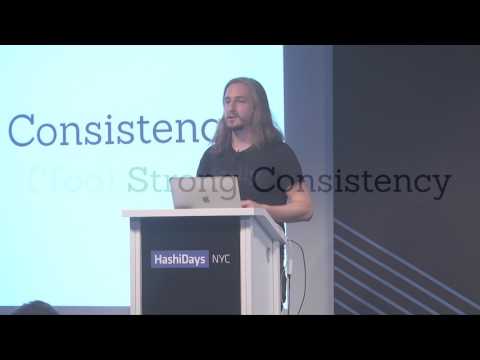
summary
Designs a datacenter healthcheck and ownership system that keeps 50+ datacenters and thousands of servers in sync for tens of thousands of origin backends, choosing rendezvous hashing for per-origin ownership, SWIM/memberlist for failure detection, and a delta-state CRDT map (version vectors + causal gossip with pull/push) for coordination-free convergence. Argues Consul-style CP consistency is overkill, prefers eventual causal consistency with rendezvous as a deterministic tiebreaker, and shows the pieces compose into a practical, convergent system.
AI-written summary · about
chapters (18)
- 0:00Introduction and motivation
- 1:48Distributed system design goals
- 3:15Health check system overview
- 6:22System requirements recap
- 7:03Why not strong consistency
- 8:08Eventual consistency explained
- 10:16Causal consistency basics
- 10:36Rendezvous hashing for ownership
- 12:24Failure detection with SWIM
- 14:54Gossip protocols for communication
- 17:03Lattices and convergence
- 19:08Version vectors in practice
- 21:18CRDT map design
- 23:47Gossip and merge mechanics
- 25:30Delta state CRDTs
- 26:35Why this matters for edge compute
- 27:37Single system image critique
- 29:42Conclusion and future directions