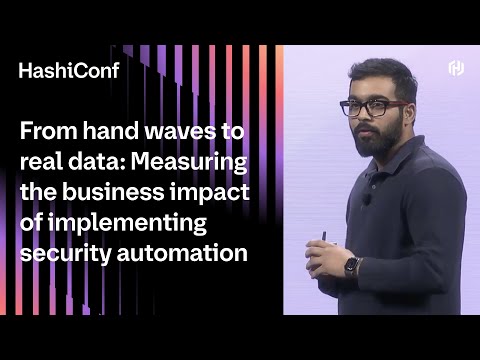
From hand waves to real data: Measuring the business impact of implementing security automation
summary
Compares two clusters: one with Kubernetes env vars and one with HashiCorp stack (Vault, Consul, Boundary) and shows measurable changes after 3–4 hour tests, including a past crypto‑mining breach that cost ~$1M. Uses Vault short‑lived dynamic secrets, Consul mTLS sidecars and intentions and Boundary 2‑minute access grants, scrapes Prometheus metrics to a dashboard, and derives business signals RFI, TTR, MAGT, toil and break‑glass. Results: RFI rises, time‑to‑remediate and mean access grant time fall, and manual break‑glass events decrease.
AI-written summary · about
chapters (6)
- 0:00Introduction and speaker background
- 3:14Security challenges in cloud native
- 9:56Business impact of security automation
- 16:48Key security metrics to track
- 23:12Real-world incident and demo setup
- 27:31Results and business signal creation
related talks
 39mSecurity in a DevOps World
 40mDay 2 keynote
 35mMeasuring change: Responding to cyber material risk
 12mMulti-Layer Defense for Scalable Threat Mitigation
 22mSecurity vs Dev Experience Threat … or Opportunity
 49mBuilding digital resilience with unified security and observability
 46mApplication security from start to finish
 26mBoost your security and resiliency in Kubernetes