Steganography and malware from Scratch
summary
Demonstrates hiding a 1 KB zip inside a 58 KB PNG and an audio WAV (Paint → render → Sonic Visualizer) then extracting it, using StegOnline, copy /b and fsutil to build stego carriers; a fileless delivery reads commands from a cloud SaaS file and runs them via PowerShell/curl to open a reverse shell, delete ~8,000 event log entries and remove originals; ELK and Windows Defender appear in the demo as monitoring/ingest points and the proof-of-concept executes end-to-end image/audio steganography, copy /b + fsutil carrier creation, fileless PowerShell reverse shell, event log clearing.
AI-written summary · about
chapters (11)
- 0:00Introduction and speaker background
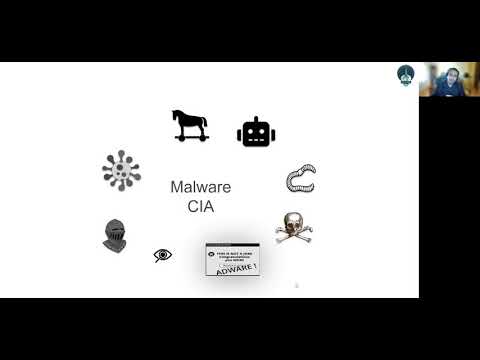
- 1:06What is malware and its types
- 9:56Simple malware examples
- 15:56Fileless malware techniques
- 19:27Introduction to steganography
- 25:23Real-world steganography attacks
- 26:27How steganography works
- 31:25Practical steganography demos
- 36:29Combining steganography with malware
- 41:46Security measures against steganography malware
- 48:00Q&A and closing remarks