A Practical Guide to Container Scheduling

summary
Kubernetes (kubes) is presented as a production-ready scheduler that runs containers across clouds and bare metal, claiming Google launches 2 billion containers per week. It schedules pods (the atomic unit), exposes them via services, and manages desired state with replica sets and deployments with server-side rolling updates; canaries are trivial (example: canary at 33% traffic). Features covered: resource requests/limits, QoS, persistent volumes, liveness/readiness probes, multi‑zone clusters, and autoscaling hooks; demos are described but not fully shown.
AI-written summary · about
chapters (31)
- 0:00Intro
- 2:30Kubernetes
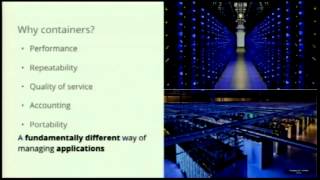
- 5:05What are containers
- 6:12Where to run containers
- 7:54Setting up a cluster
- 8:47Kubernetes overview
- 11:04Kubernetes resources
- 13:23Kubernetes overlay network
- 14:13Kubernetes labels
- 15:16Service
- 16:37Replica Sets
- 18:37Deployments
- 20:03Scaling
- 20:44Rolling Updates
- 21:54Canaries
- 22:56Batch
- 23:18Readiness checks
- 23:36gracefully terminated pods
- 24:12multizone clusters
- 24:47scheduler
- 27:44requests and limits
- 29:25resource guarantees
- 30:35configuration
- 32:52persistent volumes
- 33:19node affinity
- 33:59policies
- 34:25velocity
- 34:50GitHub
- 35:21Plans
- 35:48Open Source
- 36:31Questions
related talks
 01h 02mKubernetes Patterns
 39mIntroduction to Kubernetes
 20mKubernetes 101
 45mLimits, Requests, QoS, PriorityClasses: Demystifying Scheduling in K8s!
 58mKeynote: So, I have all these Docker containers, now what?
 31m"Introduction to Kubernetes"
 27mUnderstanding Kube-Scheduler-Simulator
 40mLimits, Requests, QoS... Rethinking What You Thought You Knew About Scheduling in Kubernetes