TinyGo: Getting the upper hen

summary
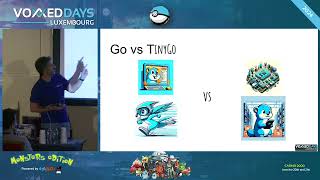
Build uses TinyGo to compile a 29 KB microcontroller binary vs Go's 1.8 MB so it fits a 256 KB Arduino Nano 33 IoT, reads a DHT22 every 10s, and sends HTTP posts to a Kubernetes-hosted Go server scraped by Prometheus and visualised in Grafana. Deployment requires adding a garden access point and powerline cabling for reliable Wi‑Fi; serial logging is handled by a small Go reader; hardware debugging needs an external probe. TinyGo: 29 KB vs Go: 1.8 MB Arduino Nano 33 IoT + DHT22 Prometheus + Grafana
AI-written summary · about
chapters (22)
- 0:00Introduction to TinyGo
- 0:51Project goals
- 1:41What is TinyGo?
- 3:35TinyGo history and use cases
- 5:23How TinyGo works
- 6:24Binary size comparison
- 7:10Compatibility and limitations
- 10:01Standard libraries
- 11:12Flashing microcontrollers
- 12:27Debugging and serial output
- 15:40Hardware debuggers
- 17:31Hen house architecture
- 19:11Overcoming networking issues
- 20:23Coding the Arduino
- 22:43Prometheus integration
- 23:39Full monitoring pipeline
- 24:24Live demonstration
- 26:52Backend data logs
- 28:01Grafana dashboard demo
- 29:00Testing sensor responsiveness
- 30:13Lessons learned
- 32:31Future improvements and wrap