Reactive for the Impatient - A Gentle Intro to Reactive Java

summary
Explains why reactive Java matters, shows concrete APIs and code patterns and compares real libraries: RxJava and Spring Reactor with map/flux/mono examples, then Akka vs Vert.x for reactive microservices using actors or verticles. Covers the Reactive Manifesto, backpressure, circuit breakers and a working noodle‑shop example that maps orders to nonblocking flows. Notes practical limits—databases remain blocking today—so expect hands‑on snippets and clear tradeoffs rather than marketing fluff.
AI-written summary · about
chapters (24)
- 0:00Introduction and background
- 2:48Why reactive now
- 5:17Reactive manifesto explained
- 6:20Reactive principles overview
- 8:28Resiliency and message-driven systems
- 10:15Reactive programming vs systems
- 12:46Event-driven vs message-driven
- 14:10Use cases for reactive systems
- 14:55Reactive programming basics
- 17:24Operators and marble diagrams
- 19:09Reactive vs imperative style
- 20:14Reactive system design patterns
- 22:03Reactive microservices vs monoliths
- 23:08Back pressure and CAP theorem
- 25:35Reactive Streams standard
- 26:17Reactive Java tools overview
- 31:35RxJava introduction
- 34:29Spring Reactor explained
- 39:03RxJava vs Spring Reactor
- 40:06Akka actor model
- 43:37Eclipse Vert.x introduction
- 45:46Key takeaways and recap
- 47:14Limitations of reactive today
- 48:38Q&A and closing
related talks
 45mReactive for the Impatient - A Gentle Intro to Reactive Programming and Systems
 39mReactive for the Impatient (A Gentle Intro to Reactive Java)
 41mThe definite guide to reactive programming in Java
 48mReactive for the Impatient
 24mBringing Reactive Programming to Java and Microservices
 56mThirst-quenching Streams for the Reactive Mind
 45mGoing Reactive - An Introduction to Reactive Programming
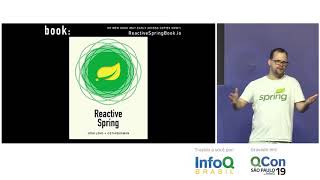 47mReactive Spring