A Game of Theories: Why languages do what they do
summary
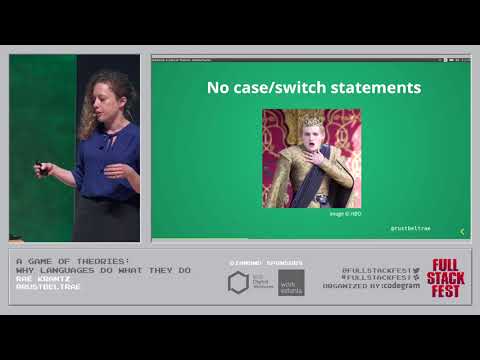
Claims and concrete mechanics: Ruby favors flexibility and monkey‑patching and uses array size jumps (examples: initial capacity 3 then 20 then 37) to avoid reallocs; Python follows the Zen and prefers dictionary lookups over adding a case/switch; Go uses goroutines and channels for concurrency, keeps true arrays and slices and intentionally omits generics; Rust enforces ownership/Option instead of null and uses ownership for deterministic deallocation; Erlang isolates processes and restarts failures; Clojure gives immutable data on the JVM; JavaScript is malformed for browsers (written in ten days) and relies on === for safety.
AI-written summary · about
chapters (12)
- 0:00Start
- 0:11A Game of Theories
- 7:15Open classes a.k.a. Monkey patching
- 9:46Spacing
- 13:29Company Story Stream
- 16:44Know what you expect, and plan for it
- 19:38No generics
- 21:54Ownership
- 23:30Garbage collection
- 31:43Expressions
- 33:23Thread-first and Thread-last chaining
- 39:43Everything is mutable


