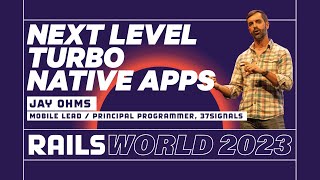
Use Turbo Native to make hybrid apps that don't suck

summary
Argues that Turbo Native (part of Hotwire) plus a web-to-native bridge lets a native skeleton reuse server-rendered HTML/CSS, sending JSON messages between Swift/Kotlin and JavaScript to render fully native elements; benchmarks show mobile JS performance leaps (iPhone 6: 24.8 → iPhone 13 mini: 349). Recommends separate codebases (Xcode/Android Studio), progressive native screens, cites Basecamp apps at 4.6 and BBC Sport at 4.7 as working examples; mentions Strada as a recent abstraction.
AI-written summary · about
chapters (8)
- 0:00Introduction and context
- 3:04The teethered cat analogy
- 5:21Debunking hybrid app myths
- 10:01Reconsidering the approach
- 12:36The hybrid advantage
- 15:11Turbo native framework
- 19:51Web to native bridge
- 25:45Conclusion and examples
related talks
 34mInsights Gained from Developing a Hybrid Application Using...
 34mInsights Gained from Developing a Hybrid Application Using...
 28mJust enough Turbo Native to be dangerous
 01h 53mHotwire Native: A Rails developer’s secret tool to building mobile apps
 24mTurbolinks, native with a trick?
 38mTurbolinks 5: I Can’t Believe It’s Not Native!
 32mStrada: Bridging the web and native worlds
 11mNative, Hybrid, PWA? How to deal with it?