Product & Project Manager’s DevOps Journey to Continuous Delivery
summary
Describes how Red Hat Developers Group moved from separate Dev and Ops departments to a single organization and adopted continuous delivery by giving teams responsibility for building, deploying and operating services in production. Covers concrete changes: organizational restructuring, running services (not just shipping products), building automated toolchains for build/deploy/maintenance, using telemetry and monitoring for continuous user feedback, and maintaining release markers, plugin-friendly architectures, and direct community/customer engagement.
AI-written summary · about
chapters (12)
- 0:00Intro
- 1:48Finally to Experimentation & Adoption
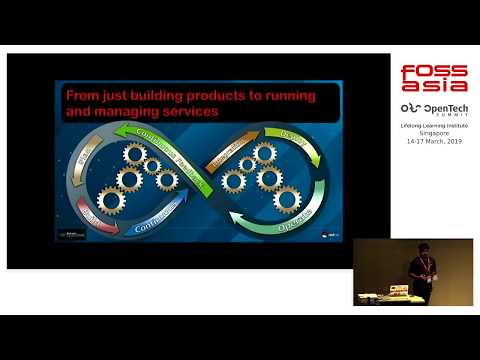
- 5:48From just building products to running and managing services
- 6:53Release schedules, patches, forks & versioning simply served as a markers on our continuous delivery path
- 7:51Toolchains & Responsive Infrastructure
- 8:23Containers allow for dynamic env. creation
- 8:49Monitoring & Alerts
- 11:37Conversations & Feedback Loops
- 12:48Telemetry - A window to Patterns & Behaviours
- 14:46Redefined architecture to allowed for extensibility
- 15:51VS Code java
- 17:38Start out an issue reported on Github Follow ups via chat/emails Discussions & Brainstorming
related talks
 30mOur Continuous Delivery Journey
 22mCreating a team mindset of continuous improvement
 38mDevops in an Industrial Company: From Milestones to a Continuous Quality Assurance Approach
 31mThe Continuous Culture
 30mModern Continuous Delivery
 37mWant to do the DevOps? Change Everything
 24mWhy, What, and How of Continuous Delivery
 29mRed Hat IT’s DevOps Journey: Year One Retrospective