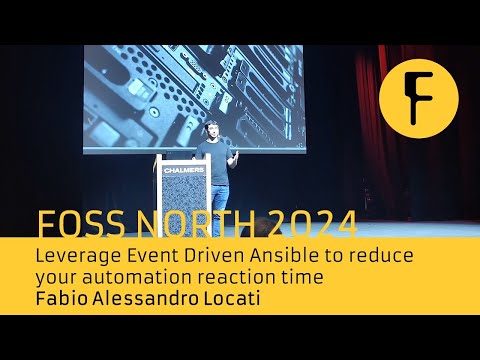
Leverage Event Driven Ansible to reduce your automation reaction time
summary
Claims that Event Driven Ansible (EDA) turns multi‑hour incidents into minutes by triggering existing Ansible playbooks directly from events; example: a recurring full database disk outage that historically takes ~6 hours now takes ~4–5 minutes to remove files and restart database when automated. EDA ingests webhooks and cloud events, file watches, IDS alerts, enriches tickets with collected context, groups events with once‑within/once‑after windows, and runs playbooks, modules or templates to remediate or annotate incidents automatically.
AI-written summary · about
chapters (11)
- 0:00Event-driven Ansible intro
- 1:20Automation failure example
- 6:23EDA solves issues
- 8:30What is Ansible in EDA
- 10:20EDA use cases
- 13:11EDA maturity curve
- 17:33EDA core concepts
- 23:09Events to actions with rules
- 28:57Grouping events & triggers
- 31:56Rule sets execution
- 34:52EDA benefits
related talks
 39mImprove Container Management with Event-Driven Ansible
 50mAutomating Kubernetes with Event Driven Ansible
 36mDriving Edge Automation with Events
 26mJenkins + Ansible = Automation
 36mMake You Ops-Life Easy – ansible usecases you didn´t out of track
 46mAutomating Disk Replacement with Ansible
 35mMiddleware Automation From the Edge to the Cloud
 15mAutomation Strategies: Real-World Experiences from F5 and