FOSS behind the scenes - the center stage is not enough
summary
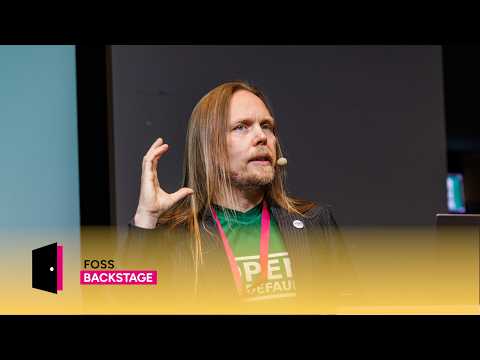
Claim: relying on proprietary services creates lock-in, exclusion and operational risk. Examples: design files in Figma, meetings on Zoom, chat on Slack, GitHub export and jurisdictional blocks that once forced Organic Maps blocked by GitHub. Concrete fixes: self-host critical services, mirror repos to Codeberg, use the Open Terms Archive to track TOS changes, file bugs and submit patches, improve documentation, and migrate with grace periods. Outcome: smaller steps reduce vendor dependency and restore control and inclusivity to projects.
AI-written summary · about
chapters (6)
- 0:00Introduction and motivation
- 3:22Why open tooling matters
- 10:51Risks of proprietary tools
- 15:29Practical steps to change
- 20:30Start small and take action
- 24:01Q&A and closing remarks
related talks
 36mFreedom vs Sustainable Business: A Candid Necessary Debate
 38mWhy Open Source and Web3 need to find (back) together
 34mFOSS like a Boss!
 31mOperationalizing Open Source Projects: When the Rubber Meets the Road
 33mThe Cathedral, the Bazaar, and the Coffee House
 13mBeyond OSS
 54mOpen Source Design Contributions for Your OSS Project
 13mKeynote: Setting the Standard - Safely Operationalizing OSS Contributions