Man Page of the Warrior of Light
summary
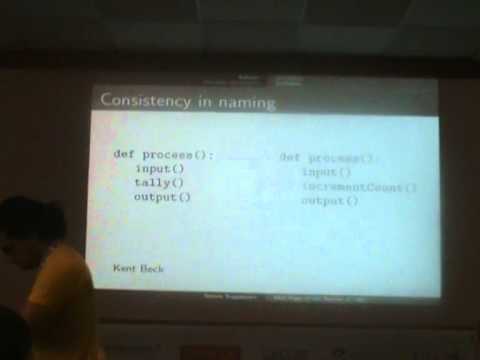
Argues that good code optimizes three values—readable, flexible, simple—and that existing complexity metrics (token count, modular decomposition, information flow) miss practical cases, so use a resource-based view: lines of code × number of inputs × outputs². Demonstrates AA trees reduced to two primitives (split and skew) with rotations of ~three lines, contrasts that deletion logic moved into cut/rewire with the STL red‑black erase spanning 12 pages, and urges consistent naming, deliberate practice, and respecting sleep and autonomy to get better.
AI-written summary · about
chapters (4)
related talks
 50mPerformance tricks learned from low level developers
 22mDecoding: programming beyond text files
 29mSyntax Hijacking: Genius or Evil?
 43mSunday Lightning Talks
 25mPEP 8: How to Avoid Being a Python Hooligan
 59mI Just Inherited 50,000 Lines of Code! What Now? — A Practical Guide
 32mRethinking Objects
 28mPracticality Beats Purity: The Zen of Python’s Escape Hatch?