¿Where's My Data?

summary
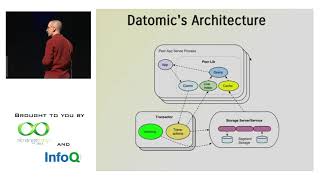
Datomic separates transaction, storage, indexing and query so queries run in-process against a local cache in application process, often leading to zero network chatter once warmed. Examples use MusicBrainz slices (1968–1973) and show surprising dataset shapes like 58 Spanish artists vs 2,000 groups to motivate ordering clauses. The entity API returns lazy, bidirectional objects so entity API is lazy and navigational while pull returns plain maps shaped by a spec so pull expressions return shaped maps and can be embedded in queries to avoid post‑processing.
AI-written summary · about
chapters (28)
- 0:00Intro
- 0:40Information model
- 1:44Datom: 5-tuple representing a fact
- 2:30Entity: a collection of facts with the same entity id
- 3:58Attributes / Schema
- 5:37Datomic Architecture
- 7:54Query: Datalog
- 10:17Query: collection spec
- 10:36Query: unification
- 11:16Pro tip: put more restrictive patterns first
- 11:50Query: disjunction
- 15:00Query: negation
- 15:55Query: more features
- 18:36Entity: associative
- 18:56Entity: lazy
- 20:43Entity: navigation
- 22:52Entity API
- 23:46Pull: wildcard specification
- 24:52Pull: ref types and components
- 25:23Pull: attribute specification
- 26:12Pull: map specification
- 27:06Pull: wildcard + map
- 27:37Pull: nested map specifications
- 27:56Pull: reverse navigation
- 28:32Pull: other features
- 29:19Pull Expressions in Query
- 32:05Summary
- 33:03¿Questions?