The Sound of Music

summary
Argues that music is simply time-series data and demonstrates a working tool called node-keyboard that pipes MIDI and text commands through Node streams and soundfonts to produce audio. Shows how functional composition and Rx (distinguishing hot and cold observables) transform notes into modes by rotating the 2‑2‑1‑2‑2‑2‑1 pattern. Proves it live: mouse position and a filtered Twitter stream mapped to pitch (e.g. Bieber ≥500 followers, Clinton ≥10,000) drive instruments; the pipeline runs and produces audible, interpretable results.
AI-written summary · about
chapters (17)
- 0:00Introduction
- 0:23The day before I turned 21
- 1:02My guitar
- 1:43Western music theory
- 2:12Decision time
- 3:16Creativity in programming
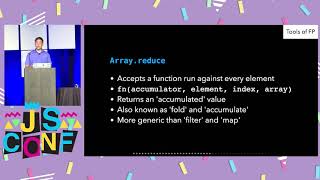
- 3:44Functional programming
- 4:45Async
- 7:25Music
- 8:43Note Keyboard
- 14:20Reactive Extensions
- 15:47Marble Diagrams
- 16:36Inversion
- 17:54Music Examples
- 19:09Modes
- 19:58Data
- 23:45Sentiment
related talks
 19mComposing music with composed functions
 40mLiveJS: Making Music with JavaScript
 30mMVC - What a web app and a Mozart Violin Concerto have in common
 44mBeats in the Browser - Coding Music with JavaScript
 36mRedux Through Music
 22mComposing music with composed functions
 52mLive Musical Coding: You Code? Become a Composer with WebAudio and WebMIDI!
 40mBeats in the Browser - Coding Music with JavaScript