Keynote: Dylib Hijacking on macOS: Dead or Alive?
summary
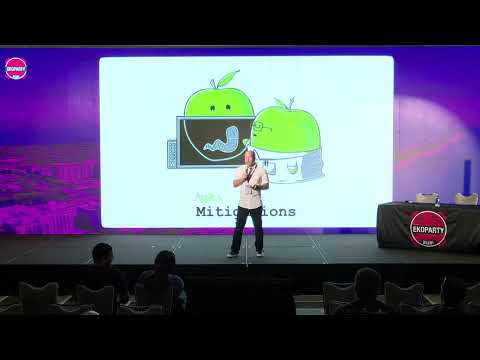
Revisits the 2015 dylib hijack findings and shows it still works on macOS 26: a symlink bypass defeats Gatekeeper translocation, Photoshop is exploitable because it has library validation disabled, and a compatible hijack uses an LC_REEXPORT to proxy exports so the app doesn’t crash. Demonstrations use the dylib hijack scanner, proc_pidinfo to enumerate loaded libraries, and Endpoint Security mmap hooks to block loads. Also exposes real supply‑chain malware (libffmpeg) that executes via a constructor.
AI-written summary · about
chapters (35)
- 0:00Introduction and keynote overview
- 1:49Security decisions at process level
- 3:36History of library hijacking attacks
- 5:24How macOS loader works
- 7:29Run path dependencies explained
- 9:15Defining dylib hijack attacks
- 10:38Impact of dylib hijacks
- 12:24Apple's mitigations overview
- 13:48Gatekeeper path randomization
- 14:54Notarization and its role
- 15:37Library validation mechanism
- 16:40App protection and modifications
- 17:23Bypassing app translocation
- 19:30Finding vulnerable applications
- 20:34Dylib hijack scanner tool
- 21:57Crafting a malicious dylib
- 24:30Bypassing system integrity protection
- 25:35Gatekeeper bypass demonstration
- 27:01Benefits of hijacking Photoshop
- 27:43Security tools blind to dylibs
- 30:28Other malicious uses of dylibs
- 31:52Equation Group's OSX implant
- 33:18Flashback malware analysis
- 34:413CX supply chain attack
- 36:44Exploits using dynamic libraries
- 37:50Detecting malicious dylibs
- 38:32Parsing load commands for detection
- 40:15Code signing validation methods
- 41:38Listing loaded dynamic libraries
- 42:43Detecting hijacks at runtime
- 43:46Blocking malicious libraries with endpoint security
- 45:12Is dylib hijacking dead?
- 45:53Call to action for defenders
- 46:37Objective-C conference invitation
- 47:22Closing remarks and thanks