Fireside Chat with Kroger: Examining their Two-Year Distributed SQL Journey & What's Next

summary
Kroger runs YugabyteDB on Kubernetes across GCP and Azure, migrating from one pilot (shopping list) to about 15 production apps including cart, checkout and the global Enterprise customer DB serving 30–40% of reads. Inventory design is reworked for accuracy and inventory scaled 10x, handled by automation and capacity increases. The team implements multi-zone/geo-partitioning for low latency and active‑active availability, and emphasizes schema design, developer training and standardized deployment patterns.
AI-written summary · about
chapters (15)
- 0:00Introduction
- 0:48Customer Technology
- 3:04Guest Introduction
- 3:33Krogers Distributed SQL Journey
- 6:42Krogers Maturity Curve
- 9:58Krogers Use Cases
- 12:51Enterprise Customer
- 15:11Business Outcomes
- 18:15Scaling Challenges
- 19:35Inventory
- 21:08Customer Experience
- 22:46Application Themes
- 24:09MultiCloud Strategy
- 27:42Deployment Architecture Value
- 29:41Distributed SQL vs Traditional Databases
related talks
 14mTransforming the Omni-Channel Experience at Kroger
 02mClip 2 – Sriram Samu
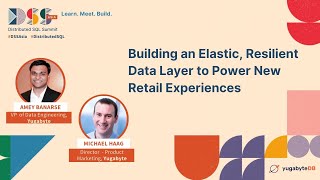 33mBuilding an Elastic, Resilient Data Layer to Power New Retail Experiences
 01mClip 1 – Sriram Samu
 30mImproving a Developer’s Life with Distributed SQL
 28mDisrupting the Status Quo with Distributed SQL to Deliver Data-Driven Solutions
 01mClip 3 – Sriram Samu
 25mScaling Innovation: Rakuten’s Cloud-Native & AI Journey with