The Lifecycle of A Service

summary
A practical blueprint for owning a service end to end: define a service boundary and name components for what they do, record intent and dependencies, version APIs, keep runbooks current, and route on‑call by functional ownership. Instrument for observability, alert on SLOs not SLAs using the hadness point between happy and sad customers, prune nonactionable alerts, coordinate product/program/support, and plan deprecation/migrations so a FakeCorp idea can scale to a billion dollars and be retired safely.
AI-written summary · about
chapters (21)
- 0:00Service ownership vision
- 1:19What a service is
- 3:24Service ownership and team boundaries
- 5:33Shared responsibility
- 6:15Engineers' role in development
- 8:41Naming services clearly
- 10:05Documenting purpose and dependencies
- 11:07Sustainability teams and runbooks
- 12:31Alerting on issues
- 13:35Program management role
- 14:17Product owners and needs
- 15:20Leadership's role
- 15:40Observability vs monitoring
- 16:42Customer experience and SLIs
- 17:45Setting the hadness point for SLIs
- 18:49Tuning alerts and reviews
- 19:30Suppressing non-actionable alerts
- 20:13Designing a new service
- 20:53Maintaining services
- 21:14Retiring services
- 22:17Collaboration across roles
related talks
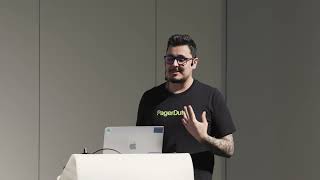 44mFull Service Ownership & The Lifecycle of a Service
 38mBuilding Service Ownership Using Documentation, Telemetry, and a Chance to Make
 50mFinding Your Service Boundaries - a Practical Guide
 54mServices, Services, Everywhere!
 49mFinding your service boundaries - a practical guide
 45mBuilding and evolving microservices: lessons from the frontlines
 58mFinding your service boundaries - a practical guide
 29mProductize Your Services! A Path Towards Effective Microservice Development