Test-oriented Cloud Application Architecture
summary
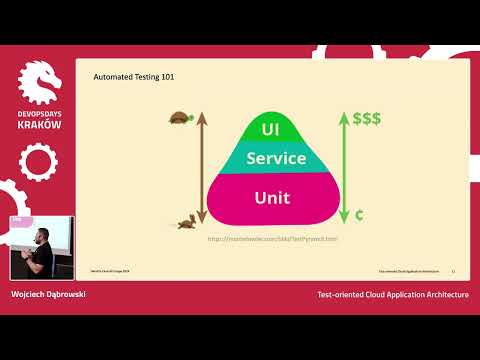
Automated testing focuses on preventing regressions and validating architecture not just verifying new features, with concrete guidance: use unit tests against pure business logic with mocks/stubs/fakes, use component tests with in‑memory fakes, and reserve end‑to‑end tests for deployed stacks that call real services. Cloud examples include Lambda + API Gateway + S3/DynamoDB, Terraform or CloudFormation parameterized to create on‑demand environments, and design patterns like hexagonal architecture and infrastructure as code to make tests practical. Hardcoded names or a distributed monolith break this approach.
AI-written summary · about
chapters (19)
- 0:00Introduction and welcome
- 2:27Purpose of automated testing
- 5:54Test types and pyramid overview
- 7:20Unit test scope and purpose
- 9:59Integration test definitions
- 12:05Component and end-to-end tests
- 16:58Practical tips for writing tests
- 18:41Test doubles and mocks
- 21:11Testing in cloud architecture
- 24:28Integration tests in cloud apps
- 24:50Component tests with fakes
- 27:26End-to-end tests and deployment
- 29:25Infrastructure as Code for testing
- 32:19Challenges in testing distributed systems
- 34:31Clean code and inversion control
- 36:41Cloud test pyramid adjustments
- 38:07Myths and facts about testing
- 41:43Testable code vs quick fixes
- 43:34Engineering vs coding practices