Infrastructure in the New World of Containers...

summary
Compares concrete options: Self managed kubernetes on the cloud, Amazon’s ECS and Fargate, Google’s GKE and orchestration alternatives (Docker Swarm, Nomad). States masters are the hardest piece — plan for at least three control nodes — and that managed services remove master upkeep but add vendor lock‑in. Shows that automatic scaling, safe rolling updates, scaling down without dropping sessions, and centralized logs are the real work, not the container runtime, and demos expose where automation fails.
AI-written summary · about
chapters (14)
- 0:00Start
- 1:06TALK OVERVIEW
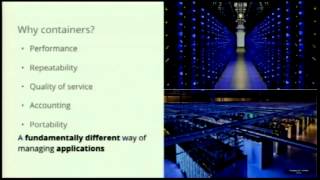
- 1:27CONTAINERS
- 2:14CONTAINER CLUSTERS
- 3:06LOCAL CONTAINER CLUSTER
- 4:53WHAT MAKES SCALING HARD?
- 7:05VARIOUS OPTIONS
- 8:03DOCKER-COMPOSE ON THE CLOUD
- 8:53CONTAINER ORCHESTRATORS
- 10:22Problem Solved?
- 11:06Master Nodes
- 13:13MANAGED KUBERNETES SERVICES
- 16:20SEMI-MANAGED CONTAINER SERVICE
- 17:18Conclusion
related talks
 35mKubernetes on AWS: Zero to hero
 42mMastering Kubernetes: Challenges, Strategies, and Best Practices
 40mMaking Sense of the '17 Ways to Run Containers on AWS'
 01h 06mSo many Docker platforms, so little time...
 33mKubernetes, Nomad, Docker Swarm...
 26mNavigating the Wild West of Building and Deploying Container
 46mDeploying and maintaining software for today's infrastructure
 58mKeynote: So, I have all these Docker containers, now what?