The sociotechnical debt of AI breaking Conway's Third Law
summary
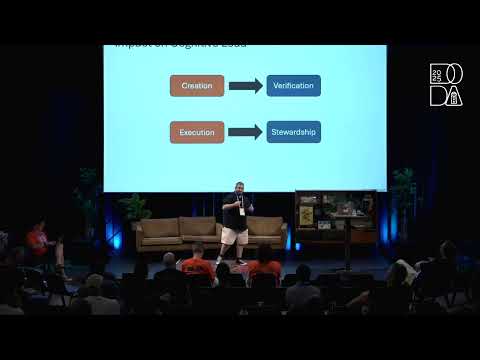
Claim: widespread LLM use reshapes team boundaries and cognitive load, risking degraded critical thinking and blurred ownership when internal models absorb org docs and code. Cites Microsoft and MIT-ish studies (one study of ~58 males aged 18–39) and examples like internal agents exposing salaries. Recommends concrete actions: map information flows, make verification first-class, provide AI literacy and AI-free time. Warns that LLM-generated architecture may conflict with existing platform skills (e.g., Lambda vs Kubernetes).
AI-written summary · about
chapters (9)
- 0:00AI and Conway's Law
- 1:48Amunson's insights on Conway's Law
- 5:00AI reshaping cognitive tasks
- 9:32Team Topologies for cognitive load
- 13:48Risks of AI overuse
- 18:21Redistributing cognitive load
- 20:30Blurring team boundaries
- 23:43AI integration recommendations
- 25:50Balancing AI opportunities
related talks
 14mSAG Expert Interview #03: Impact of AI in Software Architecture
 59mIt AI n't What You Think!
 21mAI's impact on software architecture
 22mAdapting to the Future of Work in Tech
 07mAI's impact on programming jobs and developer skills
 29mBuilding Trust in AI Agents
 10mRethinking collaboration: LLMs, teams, and cognitive load
 37mOur Brains in the AI Era