Ever heard of VideoLAN..? The story of VLC

summary
Starts as a 1990s student demo to justify a new network and becomes VideoLAN, a nonprofit that runs VLC with 1 million downloads per day and about 500 million monthly active users (3.8 billion site downloads claimed). Codebase uses a tiny core (~1,000 lines) and plug‑in modules so ports run on OS/2, Android, iOS, TVs and even ASCII output; development favors maintainability (five core maintainers, ~150 contributors/year, many one‑off patches). Projects under way: vlc.js (C/C++ → WebAssembly), multi‑process sandboxing, and libdav1d AV1 work with ~150k lines of handwritten assembly.
AI-written summary · about
chapters (34)
- 0:00Intro
- 0:38History of VLC
- 4:39Idea of VLC
- 5:00What happened
- 6:38Statistics
- 7:37Why became popular
- 8:40Why is VLC so popular
- 9:21Open Source
- 9:52Students
- 10:53Demos
- 11:33Versions
- 12:35VideoLAN
- 15:05Hosting
- 16:39Contributing
- 19:19Modular approach
- 20:17C
- 21:32How VLC works
- 23:27VLC modules
- 24:18Internet points
- 24:57Puzzle
- 26:15Console
- 26:29Output
- 26:52Android
- 27:31Watch
- 28:07Apple TV
- 28:44iOS
- 29:03VR
- 29:13Report
- 32:15New UI
- 32:45VLC for Windows
- 33:11Media Library
- 33:52Research Projects
- 37:28Video codecs
- 38:09David
related talks
 29ma (unique) story
 09mEUROPEAN SFS AWARD
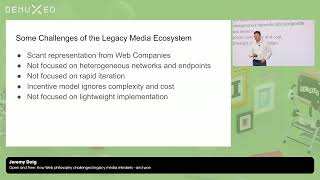 32mOpen and Free: How Web philosophy challenged legacy media mindsets - and won
 19mDriving Open Source
 19mKeynote: Accelerating Software Defined Vehicles through Open Source
 26mDebloating Software through Piece-Wise Compilation and Loading
 46mWhy You Should Do It Anyway
 27mKeynote: Opening Remarks