Utility vs Sanctity: Designing an ethically acceptable AI
summary
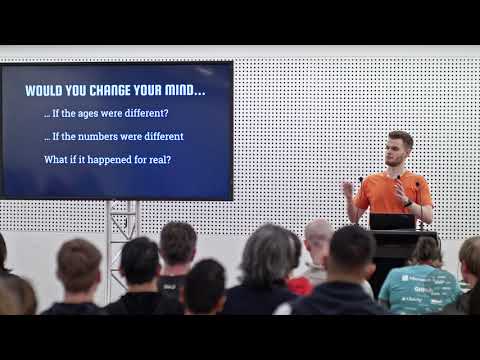
Presents the helmet vs no-helmet car scenario and the trolley problem with five vs one casualties, argues unconscious bias creeps into training data and thus into code, cites the German Ethics Commission rule to “avoid accidents” and prioritize human life while preserving driver free will, and proposes connected-vehicle coordination as the workable mitigation — but stresses during partial rollout designers face cross-border value conflicts, unresolved liability, and that perfect unbiased AI is impossible.
AI-written summary · about
chapters (8)
- 0:00Introduction and speaker
- 0:41Self-driving car dilemma
- 3:56The trolley problem
- 6:55Unconscious bias in AI
- 9:50Regulating AI decisions
- 11:55German Ethics Commission rules
- 13:42Autonomous vehicles adoption gap
- 14:25Conclusion and Q&A
related talks
 29mWhat we make matters: Ethics on the bleeding edge
 32mSo you want to develop ethical AI. What does that mean in practice?
 16mMachine Intelligence With Humans in Mind
 19mEthical Bias
 26m(Un)ethical Artificial Intelligence: How to Keep the AI Fair for Everyone
 05mToward Ethical AI
 40mSocially responsible AI: Practical tools for robust design
 20mImplementing Ethics: Developing Trustworthy AI