Panel Discussion: Foundations of Security and Leadership at Scale

summary
Panelists argue concrete steps for real systems: break monoliths into microservices but expect a bigger, distributed attack surface; codify security principles before writing code and automate enforcement in CI/CD; deploy continuous ATO and continuous monitoring with a registry-at-creation and risk scores for enclaves so validation interval approaches zero; treat machine identity as first-class, using PKI-like crypto with short-lived tokens and automated rotation often delivered via service mesh tooling; hire a dedicated security lead by ~10–20 engineers.
AI-written summary · about
chapters (8)
- 0:00Introduction and panelists
- 3:39Monoliths to microservices security
- 9:55Team design for microservices
- 14:46Observability in legacy systems
- 22:11Identity and access management
- 33:30Zero trust and machine identity
- 34:11Security program leadership scale
- 40:14Closing and Q&A
related talks
 43mTitans of Scale: Strategies to Scale Security in Expanding Organizations
 27mSecurity: The Thing That Everyone...
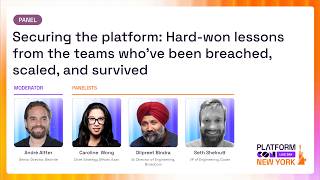 29mSecuring the platform: Hard-won lessons from the teams who've been breached, scaled, and survived
 38mKeynote: Dumping Traditional Security Teams
 36mPanel Discussion: Modern App Security Requires Containers
 51mThinking Differently About Security
 45mPanel: Modernizing Security Architecture: Platforms or Best-of-Breed, What Works?
 16mDesigning Holistic Security Programs