China Stands Up: Cybersecurity Talent and Innovative Policies in Xi's China

summary
After 2013 Xi elevates cybersecurity into a CCP standing committee and creates the Cyberspace Administration, China builds a talent pipeline: formalized degrees, a National Cybersecurity Talent and Innovation Base in Wuhan, and certification of 11 “world‑class” schools (9 in 2017 + 4 in 2019). Domestic contests like Tianfu Cup and PLA‑run robot hacking games mirror DARPA efforts; the military procurement arm now runs competitions. A 2021 rule forces 48‑hour vulnerability reporting, an 85‑page white paper outlines a four plus three model, and recruiters target pen testers, reverse engineers and vuln researchers (85% male).
AI-written summary · about
chapters (6)
- 0:00Overview and policy origins
- 1:18Talent development programs
- 3:10Changing the hacking culture
- 5:10Vulnerability management
- 6:52Cyber infrastructure growth
- 8:08Future model and conclusion
related talks
 49mEnsuring Intelligence, National Security in a Rapidly Changing Technology World
 41mChina's New Vuln System
 01h 01mDay 1 Keynote: Diplomacy and Combating Evolving International Cyber Threats
 24mUnrestricted Warfare on Campus: Chinese Information Operations and American Higher Education
 49mThe Future of Cyber Workforce - An Ecosystem View and Global Perspectives
 50mPerspectives on the Developing Cyber Workforce Strategy
 37mBuilding Security Champions
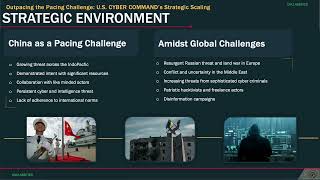 43mOutpacing the Pacing Challenge: Cyber Command's Strategic Scaling