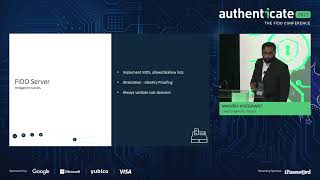
Enhancing FIDO2 Security for Safety-Critical Applications: Best Practices and Consid...

summary
Built a FIDO2-compatible smart card system for healthcare that uses WebAuthn, NFC/USB/BT, TPM attestation and AES-128/256 + SHA-256 crypto, and it runs one-time UUIDv4 links bound to requester IPs; lab deployment with ~100–150 users validates the flow. Benchmarks show 500 ms average FIDO auth versus ~1100 ms for passwords. Hardening covers load/DoS testing, anti‑malware on VMs, SQL injection mitigation and encrypted cookies; temporary NFC tags for hospitals and fallback auth are implemented and tested.
AI-written summary · about
chapters (13)
- 0:00Introduction
- 1:03FIDO2 for safety-critical systems
- 2:48FIDO2 password vulnerabilities
- 5:17FIDO2 adoption and UX
- 7:26FIDO2 architecture and WebAuthn
- 8:30FIDO2 in healthcare case study
- 13:29FIDO2 security measures
- 14:53Testing FIDO2 implementations
- 16:18Future FIDO2 and IoT
- 17:00Q&A: Indian market
- 18:29Q&A: Performance vs passwords
- 21:44Q&A: Offline and embedded FIDO2
- 23:16Closing remarks