Architecture and the Architect AD2022

summary
Presents software architecture as a maintainable set of recorded decisions using Architecture Decision Records (ADRs) and structural models with the C4 model, with diagrams generated from the model rather than hand‑drawn. Describes keeping ADRs in a central architecture repository, uses Google Cloud Firestore as a concrete example choice, argues that late decisions in IT can be cheaper than in construction, and defines the architect role as a mediator who enforces reasonable technology homogeneity (examples: Kubernetes, DataDog, RabbitMQ) to preserve evolvability.
AI-written summary · about
chapters (10)
- 0:00Introduction
- 3:56Architecture definition
- 7:48IT architecture and agile
- 10:15C4 model
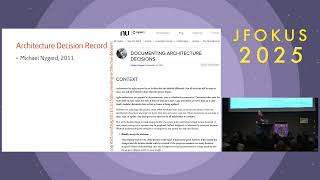
- 14:52ADR: architectural decisions
- 21:03Architect in agile teams
- 26:43Modern programming challenges
- 33:23Changing requirements and infrastructure
- 38:20Elastic architecture
- 42:11Summary
related talks
 43mWorking Efficiently with Architecture Decision Records (ADRs)
 31mLightweight Software Architecture
 39mOne Does Not Simply Make Architecture Decisions Alone: ADRs and Architec
 49mArchitecture as Knowledge
 37mArchitecting for Tomorrow: A Pragmatic Perspective
 45mDemocratising Software Architecture
 01h 00mDescribing and Documenting Your Architecture
 14mArchitecture Decision Records