Building Apache Spark Clusters on K8s for AI Workloads

summary
Claim: a resilient Spark-on-Kubernetes pipeline that actually processes terabytes and cuts cost while improving throughput. It uses the Spark Operator via Helm, enforces resource requests/limits with node affinity and GPU packing, and implements dynamic allocation plus horizontal autoscaling. Persistent volumes, Hive Metastore + Iceberg on S3 handle data, Prometheus/Grafana and Fluentd/Elasticsearch provide observability, and a case study reports terabytes processed with measurable cost reduction and end-to-end production deployment.
AI-written summary · about
chapters (14)
- 0:00Introduction to Cloud Native ML Infrastructure
- 0:30Evolution of ML Infrastructure
- 1:16Challenges in ML Infrastructure
- 2:02Apache Spark and Kubernetes for ML Workloads
- 3:25Components of Cloud Native ML Architecture
- 4:14Spark on Kubernetes: Deployment and Management
- 6:59Dynamic Resource Allocation and Autoscaling
- 9:07Data Management and Persistence
- 10:36Monitoring and Performance Optimization
- 13:47Security in ML Infrastructure
- 15:28Cost Management and High Availability
- 18:05CI/CD and Model Deployment
- 22:03Case Study and Best Practices
- 23:57Future Trends and Conclusion
related talks
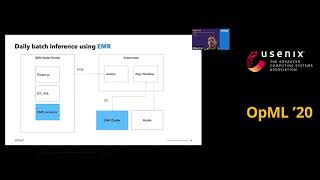 22mSPOK - Managing ML/Big Data Spark Workloads at scale on Kubernetes
 26mRe-architecting the Data Platform with Spark on Kubernetes
 21mSpark on Kubernetes: The Elastic Story
 29mDynamic Large Scale Spark on Kubernetes
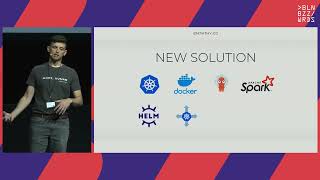 41mRunning Apache Spark on K8s: From AWS EMR to K8s
 31mManaging Multi-Cloud Apache Spark on Kubernetes
 24mDynamic Big Data in the Cloud with Kubernetes
 39mSpark on Kubernetes: Best Practice and Performance