Reverse engineering game formats for fun and profit! (or just fun)
summary
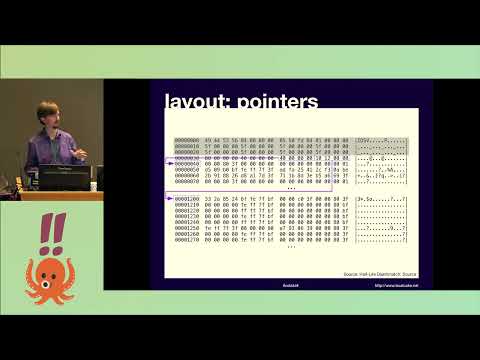
Concrete, practical reverse engineering: a hex editor plus a decode view reveals integers, endianness, signedness, and floating points (look for 3f 80 00 00 as 1.0). Files use headers, chunk headers or pointer tables; indices that are increasing indices often indicate triangle lists and let a 3D mesh be reconstructed. Images appear by resizing raw pixels, audio by waveform patterns; compression and encryption look random and resist decoding. Tools shown include search, debugger/emulator, and executable reversing; engine recreation and working conversions are achievable.
AI-written summary · about
chapters (4)
related talks
 01h 46mTutorial: Introduction to Reverse Engineering
 37mBehind Enemy Lines - Reverse Engineering C++ in Modern Ages
 51mReverse Engineering Binaries
 38mReverse Engineering is not just for hackers
 33mReverse - Engineering apps on the device - how far can we go?
 50m.NET Reversing and Exploitation for Cool Kids
 47mThe Art of Reverse Engineering Flash Exploits
 06mFrom Digital Forensics to Hardware Reverse Engineering: A Conversation