How Merkle Trees Enable the Decentralized Web!
summary
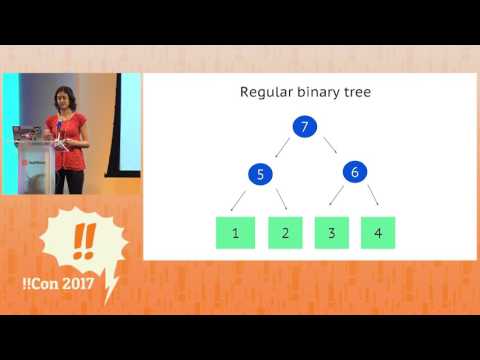
Merkle trees let a dataset be addressed by a root hash (typically 32 bytes) and verified by hashing leaves and concatenating left/right children up the tree, so a single changed chunk changes the root. Peers can fetch chunks from strangers and confirm integrity with partial proofs (only sibling hashes plus the chunk), enabling content addressing and sharded hosting; Git, BitTorrent, ZFS, and Ethereum are concrete users of this pattern.
AI-written summary · about
chapters (4)
related talks
 01h 00mThe Decentralized Web
 01h 04mKeynote: Towards a more effective, decentralized web
 39mPrivacy-preserving Approaches to Transparency Logs
 22mActually Functional Blockchain Design
 37mProgressive Centralization: The Right Way(TM) to do Web3
 22mTransparent proofs of data records in blockchain
 29mThe Evolution of Data Control in Decentralized Networks
 25mExpanding the Web 3.0 to Low-level Devices: Scaling Access