The Language of the System
summary
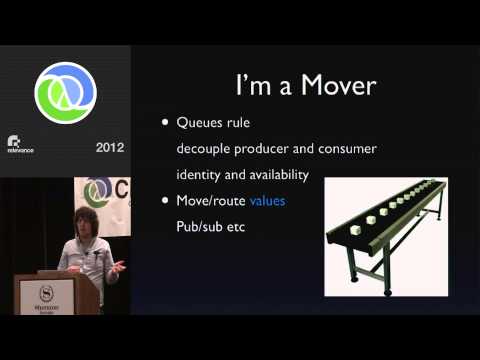
Programming languages plus runtimes shape what systems look like and most system-level gaps are about connecting pieces: wire formats (JSON, Avro, Protocol Buffers), schemas in-band vs out-of-band, and naming (use UUIDs for value names, fully qualified global names for identity). Treat services as small, composable flow: transform move route remember components, use queues to decouple identity and availability, and push the epochal time model (refs/versions via Zookeeper, Datomic on Riak, S3) into system design to handle partial failures, timeouts and idempotency.
AI-written summary · about
chapters (23)
- 0:00Introduction
- 1:45The Language Bubble
- 4:05Language + Runtime
- 10:23The Stacks
- 12:17Say What?
- 19:10Names
- 24:04Read Between the Lines
- 26:32The Revenge of Objects?
- 27:47Welcome to the Machine
- 29:11Avoiding Objects
- 31:07Transform
- 32:11I'm a Mover
- 34:17Memory
- 36:06Datomic on Riak
- 38:49Failure
- 41:46Systems are Dynamic
- 42:47Holistic Approach
- 45:20Heterogeneous Approach
- 48:12Simple System Services
- 49:50Whither the Interface?
- 53:13Programs - Systems
- 55:38Systems - Programs
- 59:17Call to Action
related talks
 40mSystems Thinking for Developers
 47mThe linguist programmer
 28mWhat You See Is What It Does: A Structural Pattern for Legible Software
 01h 07mThere Is Only One Time in Software (Language) Engineering!
 01h 17mWhen Less Is More: Designing & Decoding Complex Distributed Systems
 39mSoftware is a meal best served with different architectural spices
 40mPrincipals of System Integration
 50mSoftware Is Details