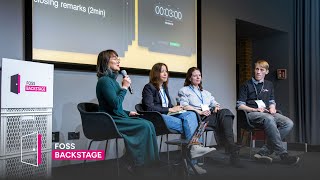
Panel: Open Source for Polish and European Sovereignty and Security

summary
Panel argues open source reduces dependency and enables control but faces a sustainability gap: governments find 20 years of backlog in maintenance and many critical projects are single‑maintainer risks. Companies report enterprise outcomes — e.g. OpenShift running the election system and agricultural services — and quantify security work as about 11 security advisories per day last year. Proposed fixes: public procurement reforms, sovereign tech agencies (Tendis model), paid support contracts and directed funding to keep critical projects maintained.
AI-written summary · about
chapters (15)
- 0:00Introduction and panelists
- 2:49Open source as a strategic tool
- 5:29Security and vendor avoidance
- 7:43Security through transparency
- 10:09Concrete solutions for stability
- 12:17Collaboration and risk management
- 15:20Closing the understanding gap
- 18:48Government responsibility
- 21:33Bridging policy and technical gaps
- 24:31Building national expertise
- 27:27Best practices across Europe
- 30:23Learning from cyber agencies
- 32:00Education and talent development
- 35:20Poland's role and maturity
- 38:29Call to action and conclusion
related talks
 32mPanel Discussion: A Vision for Open Source in Europe
 23mPanel Discussion: Public & Private Support of the Open Source Ecosystem
 45mPanel: Europe’s Open Source Motivations and Mandate: Findings From the 2025 World of Open Source...
 14mClosing the Backdoor: Digital Sovereignty for EU & Public Authorities with Open Source
 42mPanel Discussion: Advancing Innovation Through Open Source: Lessons from the Vertical Industries
 42mPanel: Open Source in the Dutch (Semi) Public Sector: Strategies, Challenges & Digital Sovereignty
 14mThe Third Decade Of Open Source
 36mFreedom vs Sustainable Business: A Candid Necessary Debate