Adventures in Asymmetric Warfare
summary
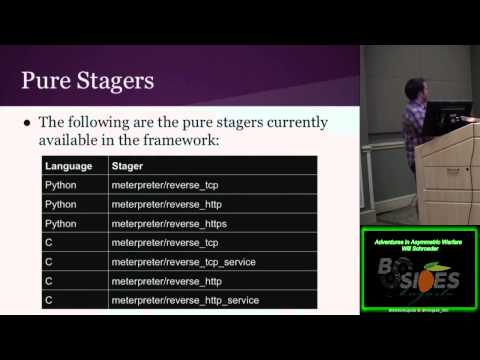
A red team builds and ships a payload generator that outputs randomized Python, C, Ruby and .NET loaders, a Python Hyperion encryptor to b64 and key-encrypt scripts, a PyInstaller obfuscated loader compiled on Kali, Ruby shellcode injection, and an area .NET cryptor that runs assemblies reflectively in memory. One thousand samples per module produce 499,500 pair comparisons by ssdeep: Python samples show ~1/3 ≥75 similarity and 66 ≥90, C interpreters give ~0.5% ≥90, and the .NET cryptor yields only five pairings ≥25, making static signatures unreliable.
AI-written summary · about
chapters (17)
- 0:00Introduction
- 1:08Speaker background
- 2:29Problem space and AV detection
- 4:55Initial research and motivations
- 6:01Python shell code injection
- 7:24Veil framework overview
- 8:47Ethical considerations
- 10:53Python obfuscation methods
- 13:40Interpreter stagers
- 16:06C obfuscation techniques
- 18:12PI installer obfuscation
- 20:22Ruby and .NET payloads
- 22:47Reflective .NET execution
- 24:54Static analysis results
- 28:53Recap and effectiveness
- 30:42Future plans and resources
- 31:05Q&A session