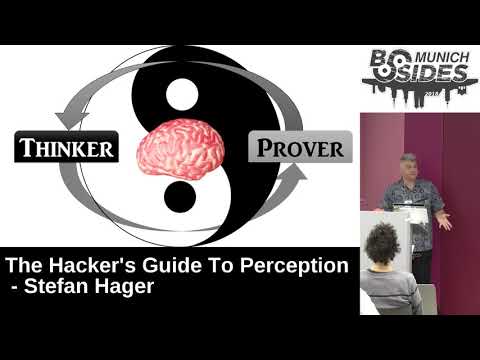
The Hacker's Guide To Perception
summary
Claim: conscious processing is tiny — roughly 60 bits per second vs senses delivering millions — so attention acts as a dynamic filter that forwards maybe ~3% of input. Demonstrations include optical, auditory and olfactory illusions, the miracle fruit taste switch, and the tactical deception of the ghost army: 2,000 simulated 70,000 using inflatable tanks and sound rigs. Mental tools shown are sandboxing/daydreaming to rehearse choices, deliberate self-observation to catch autopilot biases, travel to break cultural priors, and writing down ideas to retain them.
AI-written summary · about
chapters (20)
- 0:00Introduction and speaker background
- 1:53Why perception matters to hackers
- 2:59Your brain is lying to you
- 10:02Optical illusions and brain filters
- 14:38Other sensory illusions
- 16:03Brains as dynamic filters
- 17:27Defense mechanisms in the brain
- 19:14Brain vs. InfoSec defense parallels
- 24:58Analog vs. digital communication
- 26:02Testing your brain's limits
- 28:56Benefits for cybersecurity work
- 31:01Social engineering insights
- 32:07Doing things differently
- 33:30The Ghost Army deception example
- 35:16Why thinking matters
- 36:02Tools for self-observation
- 37:51Questioning your own beliefs
- 38:34Being scientific about perception
- 40:21Freedom of choice and hacking
- 41:30Q&A and closing remarks