Java JSR 241 and 341-RCE state of mind
summary
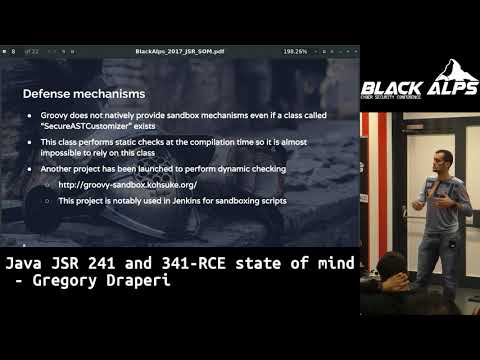
JSR 241 (Groovy) and JSR 341 (expression languages) enable runtime evaluation but lack reliable sandboxing, leading to five demos showing actual RCEs: an authenticated RCE in SpagoBI, a Pashmina-based telnet server that executes injected Java via class.forName/ProcessBuilder, and VM/OGNL/JUEL cases where eval/getValue accepts unchecked expressions. Vulnerable classes include groovy.util.Eval and GroovyShell; regex filters and Java SecurityPolicy prove insufficient in practice, and projects like Jenkins rely on brittle custom sandboxes that attackers bypass.
AI-written summary · about
chapters (19)
- 0:00Introduction and speaker intro
- 0:49About the speaker and topic focus
- 1:55What are JSR 241 and 341
- 4:51Impact of Groovy vulnerabilities
- 6:16Demo 1: SpagoBI RCE
- 9:15Groovy sandboxing mechanisms
- 11:03JUEL expression language risks
- 12:27Demo 2: Pashmina SSH server RCE
- 15:46JUEL sandboxing limitations
- 17:14MVEL expression language risks
- 19:16Demo 3: jBPM RCE
- 21:58MVEL security policy issues
- 22:43Hospice OBEES expression language
- 24:30Demo 4: Hospice OBEES file access
- 27:38GL expression language risks
- 28:43Demo 5: Apache Syncope task RCE
- 32:12Sandboxing guidelines for developers
- 33:17Summary and future work
- 34:19Q&A session