Kubernetes & real-time analytics: How to connect these worlds with Apache Flink

summary
Compares running Apache Flink on Kubernetes via Lyft/GCP operators, the official deployment, Ververica Platform GUI, or bespoke scripts, and gives concrete tradeoffs: operators simplify lifecycle but lag on features, Ververica adds a GUI but community edition requires external storage, and custom setups need scripting. Recommends durable state storage (hosted disks or S3), Kafka/Pulsar connectors for ingress, integration and blue/green testing, monitoring job/task manager metrics, and autoscaling rules to reach high throughput and stable stateful performance.
AI-written summary · about
chapters (9)
- 0:00Introduction to talk
- 3:16Apache Flink overview
- 7:12Real-time analytics use cases
- 10:23Flink job management
- 13:13Flink operators and tools
- 16:06Testing and validation
- 19:58Production deployment
- 24:15Getting started guide
- 25:16Q&A and resources
related talks
 43mApache Flink in Production with Ververica Platform
 24mKeynote: The Easiest Way to Get Operational With Apache Flink
 20mReliable, Real-Time AI with the Ververica Platform + a Kubernetes Operator in a Growing Startup
 22mBuilding a Kubernetes Operator for Apache Flink in Java
 44mLets Deeploy Flink - Uncovering Hidden Depths of Yarn, Docker, Kubernetes & Beyond
 58mReal-Time ML Applications at Scale with Flink and Beam on Kubernetes and GCP
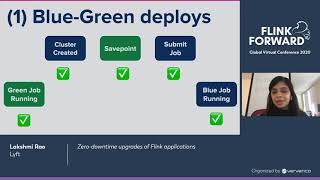 16mZero-downtime upgrades of Flink applications
 17mGetting Started with Flink for Small Teams w/ RabbitMQ and Kubernetes