Streaming Databases
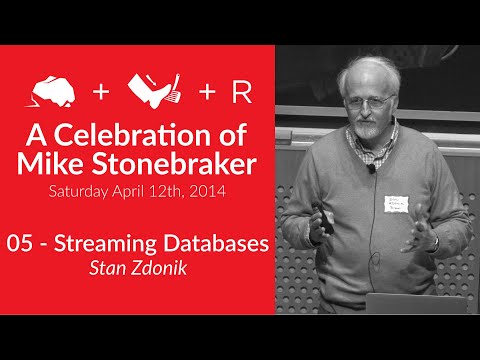
summary
A streaming system called Aurora is described: push-based engines that apply SQL-like operators, windows, and user-defined functions to input streams and emit continuous answers; a distributed version Borealis adds load balancing and high availability. Practical techniques include load shedding (approximate results by dropping tuples), timeouts and slack to handle late or early tuples, and integrating storage for hybrid workloads. A Linear Road benchmark was created in two days, the SIGMOD demo wins best demo, and a company product (StreamBase) commercializes the work.
AI-written summary · about
chapters (9)
- 0:00Session introduction
- 2:57Meeting Mike Stonebraker
- 5:39Origins of streaming research
- 11:53Borealis and benchmarks
- 14:02Building the academic team
- 17:03Commercializing the research
- 20:04Mike as an actor
- 22:51Business lessons learned
- 25:16Mike's musical talent
related talks
 35mAmazon Aurora DSQL: Scalable, Distributed Relational Databases
 48mUnlocking Real-time Insights: Enhancing Your Databases With Stream Processing
 34mReal time OLAP and Stream Processing Friends or Foes
 40mOne SQL to Rule Them All
 43mDeep dive into Amazon Aurora and its innovations
 28mGet started with Amazon Aurora DSQL
 43mKeep calm and dive deep into newest database innovations
 40mThe Seven Deadly Sins of Streaming