The Data Science behind Cruise’s Robotaxi Fleet

summary
Describes concrete systems Cruise uses: dense safety metrics derived from near collisions and human accident benchmarks, simulation test case sampling for release decisions, and real fleet telemetry streaming to the cloud while cars retain local navigation. Commercial work includes city zoning with time discretization and a linear program for transition rates to position vehicles, a discretized charge-level LP for charging and deployment schedules, pickup spot optimization trading walk time, trip time and stop failure probability, and road-specific risk scores used in routing.
AI-written summary · about
chapters (8)
- 0:00Cruise’s robotaxi data science
- 1:04Two data science areas
- 3:39Commercial challenges
- 4:49Vehicle positioning
- 7:58Charging and maintenance
- 9:45Pickup and drop-off optimization
- 11:27Risk-based routing
- 12:55Q&A
related talks
 34mData Drives Business
 28mPredicting the Unpredictable Cruise’s Continuous Learning Machine
 08mdata science in automotive
 21mML Infrastructure for Autonomous Vehicles
 23mOptimising organized transport at scale
 26mData Driven Culture in Software Defined Vehicles
 23mMaking Sense of Streaming Sensor Data: How Uber Detects On-trip Car Crashes
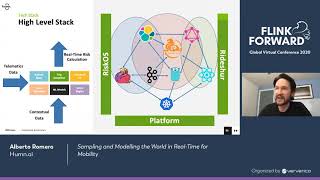 38mSampling and Modelling the World in Real-Time for Mobility