How to create a useful MySQL bug report
summary
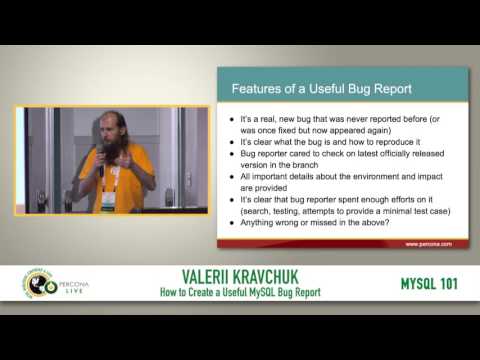
Explains how to find prior reports on bugs.mysql.com and vendor trackers, what exact fields to include (OS and kernel, MySQL version, error log and stack trace, reproducible SQL or a minimal repeatable test case with input data), and which artifacts speed triage (core dump, EXPLAIN, uptime, binary build info). Shows verified examples where clear test cases and artifacts lead to fast processing and fixes, outlines Oracle and Percona bug lifecycle so expectations about response and release timing are realistic.
AI-written summary · about
chapters (9)
- 0:00MySQL bug reporting intro
- 3:15Why public bug reporting matters
- 6:47Structure a useful bug report
- 10:38Key details to include
- 14:14Find existing bug reports
- 17:28Community expectations
- 20:44Effective bug report examples
- 23:15Security bugs reporting
- 25:25Final tips & Q&A
related talks
 49mHow to Build a Nest for a Bug: Reproducing Database Issues
 33mMySQL Test Framework for Customer Support and Bug Verification
 25mBillions of Records in MySQL: Lessons Learned
 51mResolving MySQL Problems Quickly
 49mMySQL monitoring and debugging: maximum insight with minimal cost
 15mThe Path to MySQL Open Innovation
 43mOptimizing MySQL without SQL or touching my.cnf
 55mLet's Talk About MySQL Query Tuning